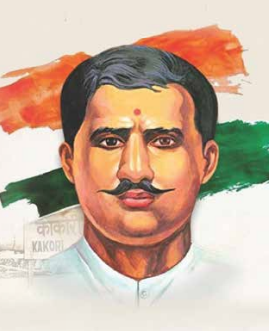
What the record establishes, and what a century of retelling has built on top of it.
Ram Prasad
Bismil
1897–1927
Of Shahjahanpur. A Hindu of a family that had come from the Chambal country, formed in the Arya
Samaj, writing in Hindi and Urdu. Organiser of the Hindustan Republican Association in the United
Provinces. Hanged at Gorakhpur Jail on 19 December 1927.
Ashfaqulla
Khan
1900–1927
Of Shahjahanpur. A Muslim of a Pathan family, and himself a poet in Urdu. Described in the record as
Bismil's lieutenant in the association. Arrested more than a year after the others, tried separately,
and hanged at Faizabad Jail on the same morning.
What is documentedThe working relationship
The two men came from the same district, belonged to the same organisation, held positions in it that
placed one under the other, took part in the same action at Kakori, were prosecuted in connected
proceedings, and were executed on the same day in different jails. Both wrote verse. Both were
conscious of what their partnership represented in a province where communal politics was hardening
through the 1920s. That is a substantial and entirely documented record, and it is the reason the
pairing became meaningful.
What has been addedThe friendship as national parable
From the 1930s onward, and with increasing intensity after Partition, Bismil and Ashfaqulla Khan were
made to carry a message about Hindu-Muslim unity. Their relationship was elaborated in poetry, in
popular biography, in school readers and eventually on screen — complete with conversations,
promises and deathbed exchanges that no contemporary source records.
The elaboration is understandable and, in its intention, honourable. It is still worth naming as
elaboration. The historical relationship is documented as an organisational one between two men of
different religions from the same town who were prosecuted and executed together. That is a fact about
the 1920s. The parable built on it is a fact about every decade since — and it says at least as much
about India's later anxieties as about the two men themselves.